Understanding the Difference Between the GCCF “Evidence of Veterinary Tuition” and “Veterinary Assessment” Certificates
If you are progressing through the GCCF’s training pathways, you may encounter two different veterinary-related certificates. Although they sound similar, they have distinct purposes, timing, and submission routes. Mixing them up can cause delays in your progression, so it’s worth knowing exactly what each one is for.
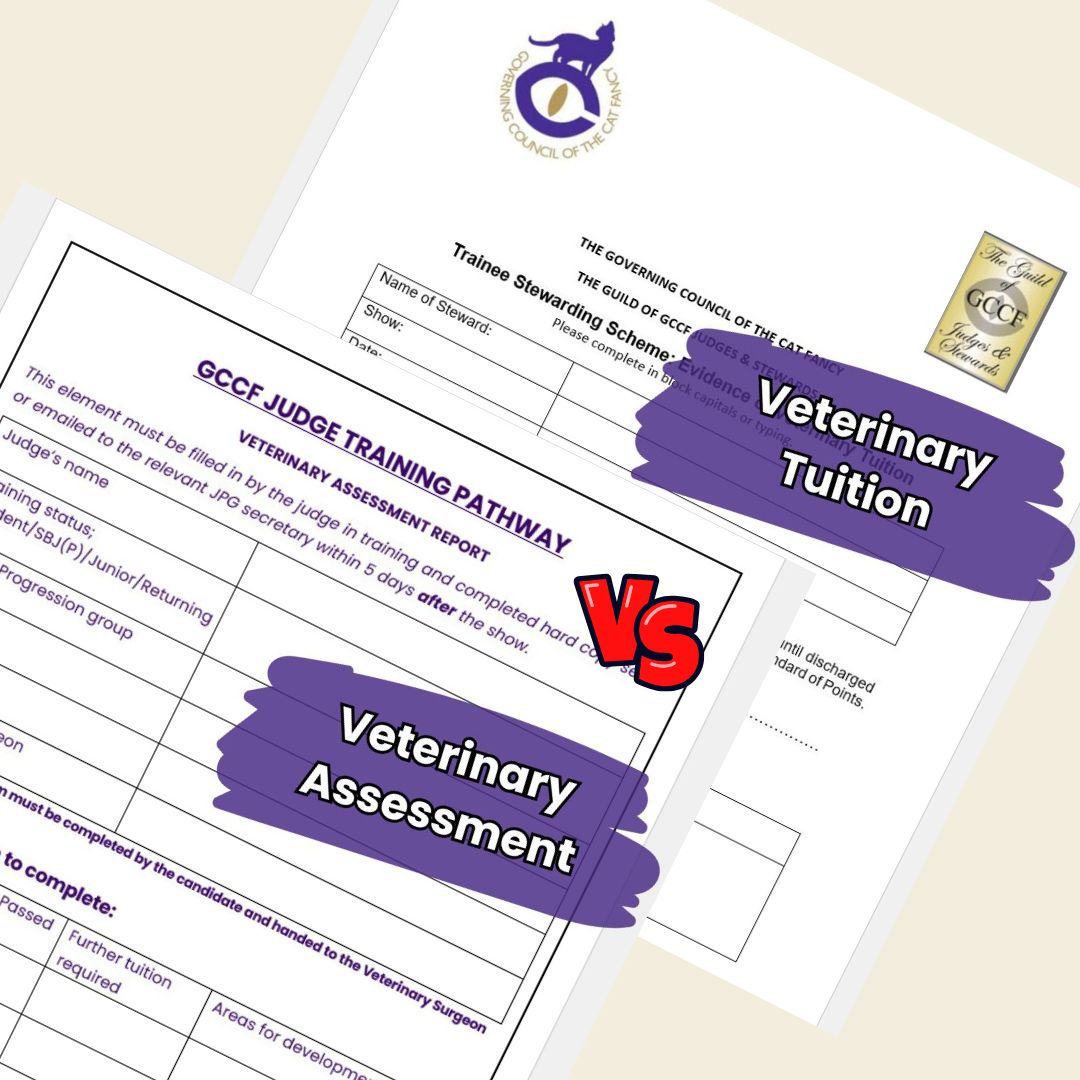
1. Evidence of Veterinary Tuition
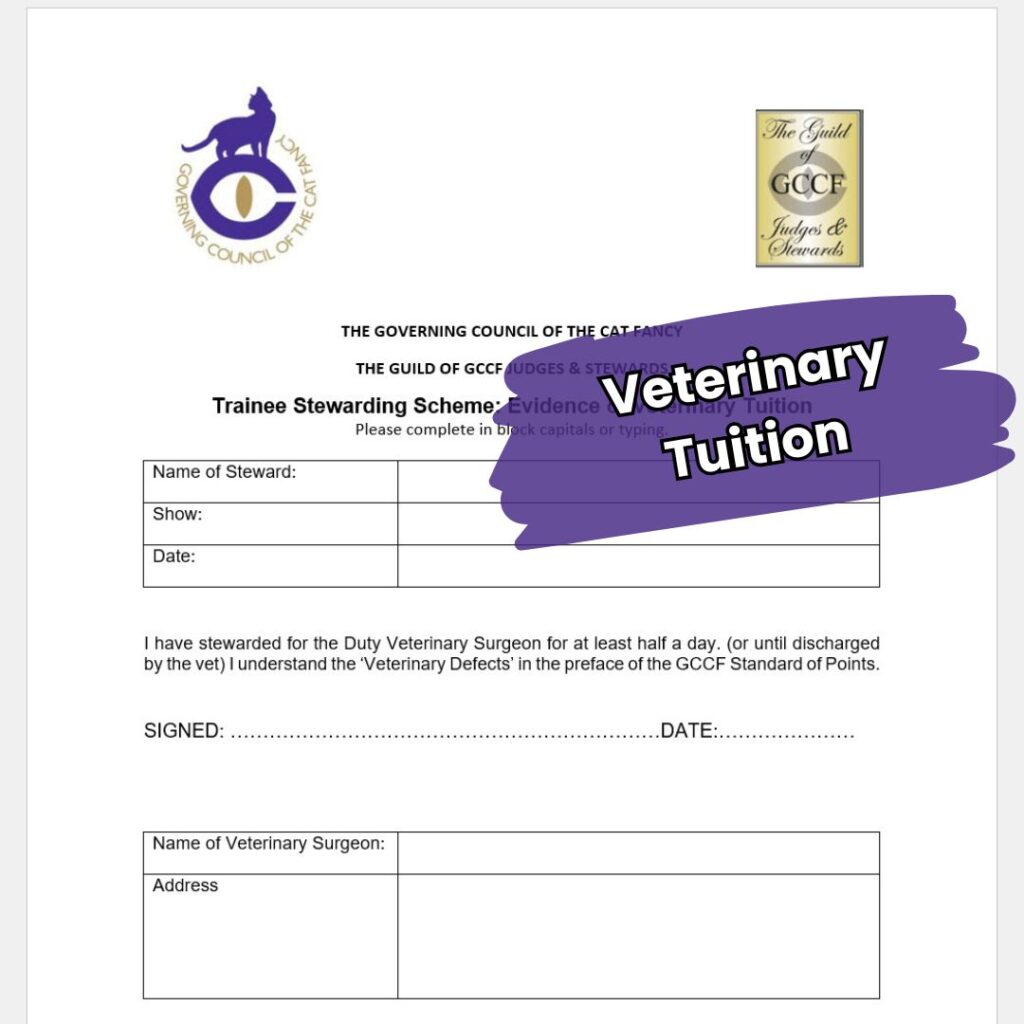
You can download the form from this page.
Purpose
This form is part of the GCCF Stewarding Scheme and is one of the requirements for becoming a GCCF Steward (Fully Qualified).
What it involves
You work as steward for the Duty Veterinary Surgeon at a GCCF show for at least half a day (or until discharged by the vet).
During that time, you are expected to show understanding of the Veterinary Defects listed in the preface of the GCCF Standard of Points.
Submission
- Complete the official Evidence of Veterinary Tuition form.
- Have it signed by the Duty Veterinary Surgeon.
- Per the form itself, send it to the Guild of GCCF Judges & Stewards within one month of the show.
- Soft or hard copies are acceptable.
Special note
If you plan to go directly into Student Judge training, you can replace this requirement with the full Veterinary Assessment used in the Judge Training Programme.
How to prepare for your Evidence of Veterinary Tuition
Before your stewarding session with the Duty Veterinary Surgeon, get familiar with the list of veterinary defects in the preface to the GCCF Standard of Points. On the day, you should be ready to:
- Recognise and name the common defects the vet points out.
- Explain, in general terms, why each is a defect and how it can affect the cat.
- Complete your section of the Evidence of Veterinary Tuition form and hand it to the vet to sign.
Revise from the GCCF’s own guidance:
- GCCF Veterinary Defects Guide — background plus two short “Cat Defect Judging” films.
- Guide to Defects in the GCCF Standard of Points (PDF) — the full list of veterinary defects.
2. Veterinary Assessment
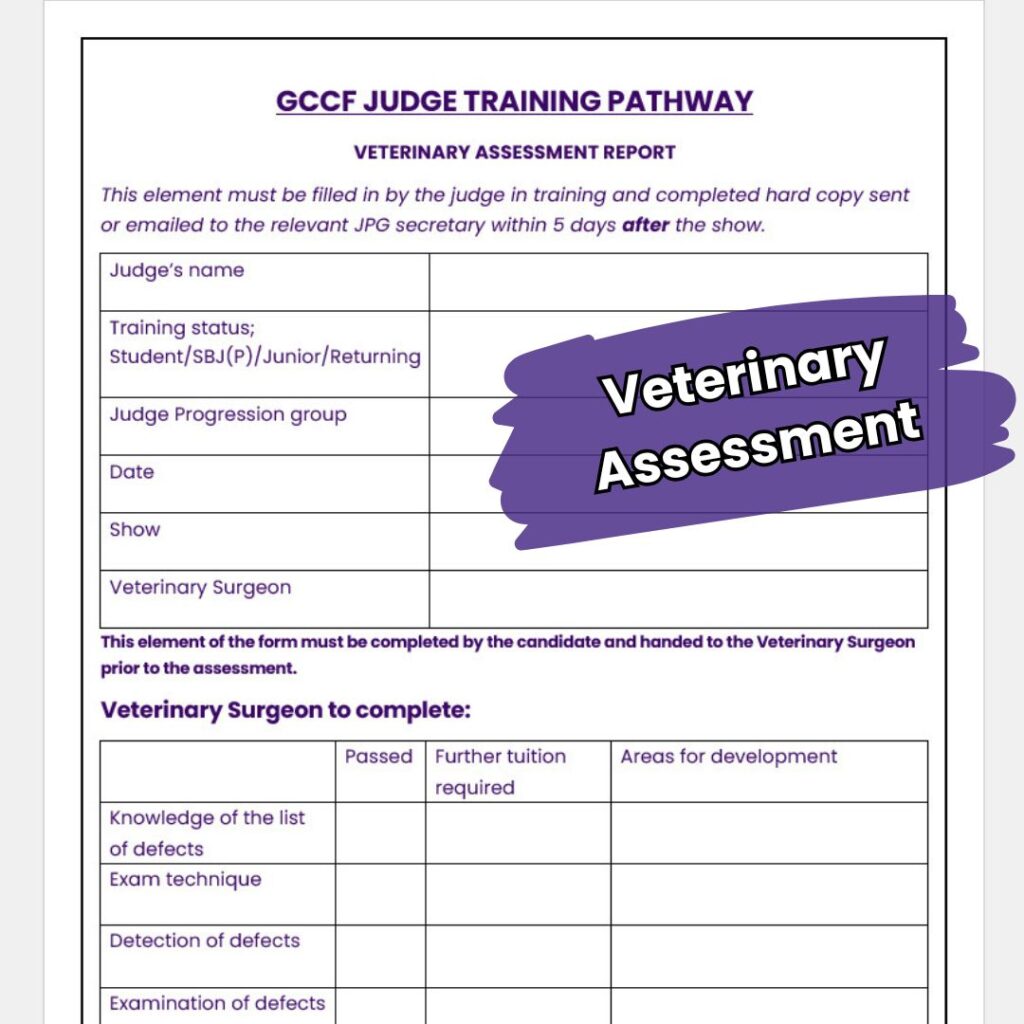
You can download the form from this page.
Purpose
This is a formal requirement in Stage 2 of the GCCF Judge Training Programme. It applies to:
- Student Judges before promotion to Junior Judge.
- Speciality Breed Judges (Provisional) before removal of provisional status.
What it involves
- A practical assessment at an All-Breed show.
- You are assessed on your ability to identify and understand veterinary defects, and to answer questions on all defects listed in the SOP preface and those in the Guidance Notes on Veterinary Defects.
- The assessment may cover cats from all sections, not just your training list.
- Advised (but not compulsory) to undertake the assessment when acting as the Duty Vet’s assistant.
How to prepare for your Veterinary Assessment
This is a formal assessment, so prepare thoroughly. The Duty Veterinary Surgeon marks you in four areas: knowledge of the list of defects, examination technique, detection of defects, and examination of defects. To be ready you should:
- Study all the defects in the preface to the Standard of Points and in the GCCF Veterinary Defects Guide — the assessment can cover cats from every section, not only your training list.
- Be able to detect and examine defects by handling the cat, not just describe them.
- Complete your section of the Veterinary Assessment (Form 8) before the show and hand it to the Duty Vet before the assessment begins.
- Afterwards, fill in your reflective section (what you learned and what to develop) and send the completed form to your JPG Secretary within 28 days.
Revise from the GCCF’s own guidance:
- GCCF Veterinary Defects Guide — background plus two short “Cat Defect Judging” films.
- Guide to Defects in the GCCF Standard of Points (PDF) — the full list of veterinary defects.
Submission
- Use the Veterinary Assessment form.
- The candidate completes their sections before and after the assessment; the Duty Veterinary Surgeon completes theirs during the assessment.
- Per the form itself, the completed document must be sent to the relevant Judge Progression Group (JPG) Secretary within 28 days of the show.
- Important: Even if you have already submitted a Veterinary Assessment to the Judges’ Guild (for example, while qualifying as a steward), this does not automatically reach your JPG Secretary. You must make sure your JPG Secretary also receives a copy for it to count towards your Judge Training requirements.
How often do you have to do it?
- A Veterinary Assessment only needs to be completed once in your judging career.
- You will do it during your Student Judge stage, and you only ever enter the Student Judge stage once.
- Once you have passed and progressed to Junior Judge and then Full Judge, that assessment stands.
- If you later train in another breed group starting at the Junior Judge stage, you do not need to take another Veterinary Assessment.
- A further assessment would only be required in exceptional circumstances, and your JPG would have to provide a written reason for it.
| Feature | Evidence of Veterinary Tuition | Veterinary Assessment |
| Part of | GCCF Stewarding Scheme | GCCF Judge Training Programme |
| Who needs it | Steward candidates | Student Judges and SBJ(P) |
| Purpose | Steward qualification | Promotion readiness check |
| Setting | Stewarding for Duty Vet | All-Breed show, formal assessment |
| Assessor | Duty Veterinary Surgeon | Duty Veterinary Surgeon |
| Knowledge scope | SOP preface defects | SOP preface defects + Guidance Notes on Veterinary Defects |
| Submission to | Judges’ Guild | JPG Secretary |
| Deadline | 1 month from show | 28 days from show |
| Substitutable? | Yes, with Vet Assessment if going straight to Student Judge | No – compulsory in Stage 2 |
Final Tip
If you are in the Stewarding stage, keep your Evidence of Veterinary Tuition safe and send it in promptly.
If you are in Judge training, make sure your Veterinary Assessment is booked at an All-Breed show and returned within 28 days. These are two separate steps in the GCCF’s progression pathway — meeting both, at the right time, ensures you move forward without unnecessary delays. (make sure your JPG secretary has your veterinary assessment even if you have already submitted to the judges guild or the JASRG.